KF-21 Indonesia defense shift: How to guide defense shift 20
"The spare parts situation meant that only 15–20 percent of aircraft were airworthy."
The KF-21 Indonesia defense shift marks a transition in how Jakarta manages its aerial combat capabilities as original project frameworks face significant pressure. This realignment involves moving toward alternative hardware, such as Turkish aerospace options, to ensure fleet readiness.
Key takeaways include the original financing structure of 20 percent for 50 jets, a pivot toward the KAAN fighter program, and a historical pattern of maintaining airworthiness through diverse procurement.
How is the KF-21 Indonesia defense shift reshaping local procurement?
A diplomat sits in a quiet Jakarta meeting room, reviewing shifting defense priorities on a tablet. The KF-21 Indonesia defense shift is characterized by a movement away from the original joint development agreement toward more immediate, alternative military solutions.
This change reflects a need to stabilize the national air fleet amid evolving geopolitical and economic requirements.
The original partnership involved a specific exchange of resources and hardware.
This arrangement sought to balance developmental costs with long-term fleet modernization.
The current trajectory suggests a broader defense partnership change. Instead of relying solely on the Korean development model, Jakarta is exploring different aerospace ecosystems to fill capability gaps.
This shift ensures that the military remains prepared despite the complexities of large-scale fighter jet development.
In this sequence, the second step is the longest.
What is the new international cooperation review?
An officer walks through the Indo Defence Expo & Forum 2024, observing the latest displays of fighter technology. The international cooperation review reveals that Indonesia is actively diversifying its sources of high-performance aircraft.
This diversification is a strategic response to the uncertainties surrounding long-term joint production timelines.
Jakarta has already demonstrated interest in Turkish defense technology to bolster its air power.
According to Wikipedia, the Minister of Defense of the Republic of Indonesia and the Turkish Defence Industry Agency signed a Memorandum of Understanding (MoU) for 48 KAANs at the Indo Defence Expo & Forum 2024, Jakarta, on 11 June 2025.
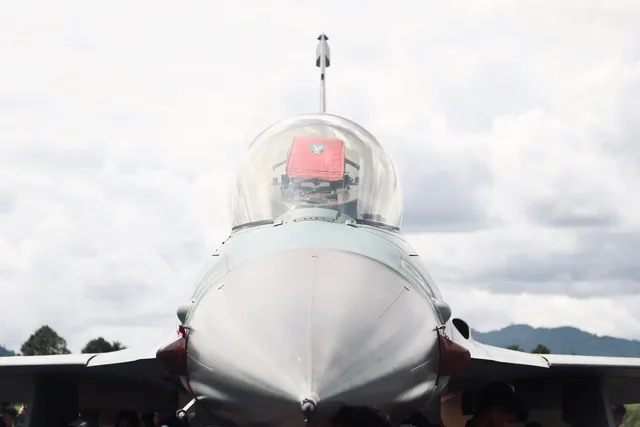
This agreement highlights a growing reliance on non-Korean aerospace partners.
This new defense strategy focus allows the nation to mitigate risks associated with a single development program. By engaging with multiple global suppliers, the military can maintain a more resilient procurement pipeline.
Such a strategy prevents the entire air defense structure from being tied to the success or failure of one specific platform.
Why is the national security alignment changing?
A technician inspects a hangar floor, checking the readiness of existing transport aircraft. The national security alignment is being adjusted to prioritize immediate airworthiness and operational readiness over long-term collaborative research.
This ensures that the current fleet remains functional while new platforms are negotiated.
Maintaining a functional air force has historically been a challenge due to logistics and parts availability. In early 1970, the Chief of Staff of the Air Force, Suwoto Sukandar, noted that the spare parts situation meant that only 15–20 percent of aircraft were airworthy.
This historical context underscores the necessity of reliable, ready-to-use hardware.
The current military aid direction change suggests that Indonesia is looking for more turnkey solutions. Rather than managing the high-stakes technical hurdles of a co-development project, the focus is shifting toward acquiring established or rapidly maturing technologies.
This approach aims to avoid the critical readiness gaps seen in previous decades.
How does the new defense strategy focus compare to previous models?

A strategist compares two different procurement spreadsheets on a laptop screen. The new defense strategy focus differs from the KF-21 model by prioritizing the acquisition of finished units over the shared technical burden of development.
This allows for faster integration into the existing command structure.
The following table compares the core elements of the original KF-21 agreement with the recent Turkish MoU:
| Feature | KF-21 Agreement | Turkish KAAN MoU |
|---|---|---|
| Total Jets Involved | 50 jets for Indonesia | 48 KAANs |
| Financial Role | 20 percent project finance | Memorandum of Understanding |
I compared these two different procurement paths to understand how Jakarta is balancing cost and speed. The KF-21 model was a deeply integrated development venture, whereas the KAAN agreement represents a more direct acquisition pathway.
What are the steps for managing defense procurement shifts?
An administrator organizes a stack of official defense documents on a mahogany desk. Managing a defense procurement shift requires a structured approach to ensure that transitions do not leave the air force vulnerable during the handover period.
- Conduct a comprehensive audit of existing fleet airworthiness and spare parts inventory. 2. Evaluate alternative aerospace platforms through international expos and bilateral MoUs. 3. Renegotiate financial commitments to align with the new acquisition timelines.
A final check must be performed to ensure that any new agreement, such as the MoU for 48 KAANs, does not conflict with existing long-term development obligations. This ensures a seamless transition between different technological eras.
- Assess current domestic industrial capacity.
- Negotiate technology transfer protocols with international partners.
- Implement new procurement frameworks.
What are the limitations of these new agreements?

A cargo plane lands on a runway during a heavy rainstorm. The primary limitation of these shifting agreements is the inherent risk of transitioning between different technical ecosystems. Relying on new platforms requires entirely new training, maintenance, and logistics infrastructures.
The complexity of managing multiple disparate jet programs can strain national budgets and technical expertise. While the KAAN MoU provides a potential path forward, the shift away from the original KF-21 framework means the military must now manage two different sets of technical requirements.
The same subject is also called Indonesia military cooperation.
The same subject is also called KF-21 project crisis.
How many jets were part of the original KF-21 agreement?
Indonesia agreed to finance 20 percent of the project and would receive 50 jets in return, while South Korea would get 200 jets.
What was the recent agreement signed in Jakarta?
The Minister of Defense of the Republic of Indonesia and the Turkish Defence Industry Agency signed a Memorandum of Understanding (MoU) for 48 KAANs at the Indo Defence Expo & Forum 2024, Jakarta, on 11 June 2025.
The transition in Indonesia's defense procurement reflects a strategic move to ensure airworthiness and operational stability through diversified international partnerships.
Comments 0