Indonesia KF-21 cooperation: Why co-production was cancelled
"The journey from a shared development agreement to a customer-only relationship reflects the complex intersection of national defense ambitions and economic realities."
The Indonesia KF-21 cooperation has transitioned from a co-development partnership into a buyer-seller relationship. This shift follows years of negotiations regarding funding, technical data, and production sharing.
Key takeaways include the shift in procurement strategy, the status of current flight testing, and the economic context of Indonesian manufacturing.
How has the Indonesia KF-21 cooperation changed?
A blueprint for a joint fighter jet sits on a desk in a quiet briefing room. In July 2010, the Indonesian government agreed to fund 20% of the KF-X project cost in return for prototype 005 (designated IF-X), system development participation, technical data, and production sharing.
The original intent was to build a shared technological foundation through deep integration. However, the Indonesian Ministry of Defense announced that the co-production of KF-21 with PTDI has been cancelled.
Instead, they have opted to purchase the aircraft as a regular customer, ending all contributions despite concluding payment on the remaining contribution. This change marks a pivot from co-development to standard procurement.
- Re-evaluate the existing bilateral agreements.
- Negotiate updated funding obligations.
- Align technical development milestones.
- In this sequence, the second step is the longest.
What is the status of Indonesian defense aviation?

An engineer inspects a wing assembly under bright hangar lights. While the KF-21 project moves forward, other regional projects continue to shape the landscape of Indonesian defense aviation.
According to the Defense Acquisition Program Administration, the successful completion of the flight testing phase for the KF-21 Boramae was announced on January 13, 2026.
The shift in strategy reflects a move toward specialized procurement rather than broad-scale co-production.
For instance, Indonesian Aerospace and Scytalys, a Greek company, signed a framework agreement on 21 November 2025 to develop the N219 MSA (Maritime Surveillance Aircraft) variant for the Indonesian Maritime Security Agency (Bakamla). This indicates a focus on specific mission-capable platforms.
According to World Bank, the 2025 record includes 5.1%.
What are the KF-21 partnership challenges?
A technician monitors a flight data screen during a high-altitude test. The KF-21 partnership challenges stem from the divergence between original development goals and final procurement decisions.
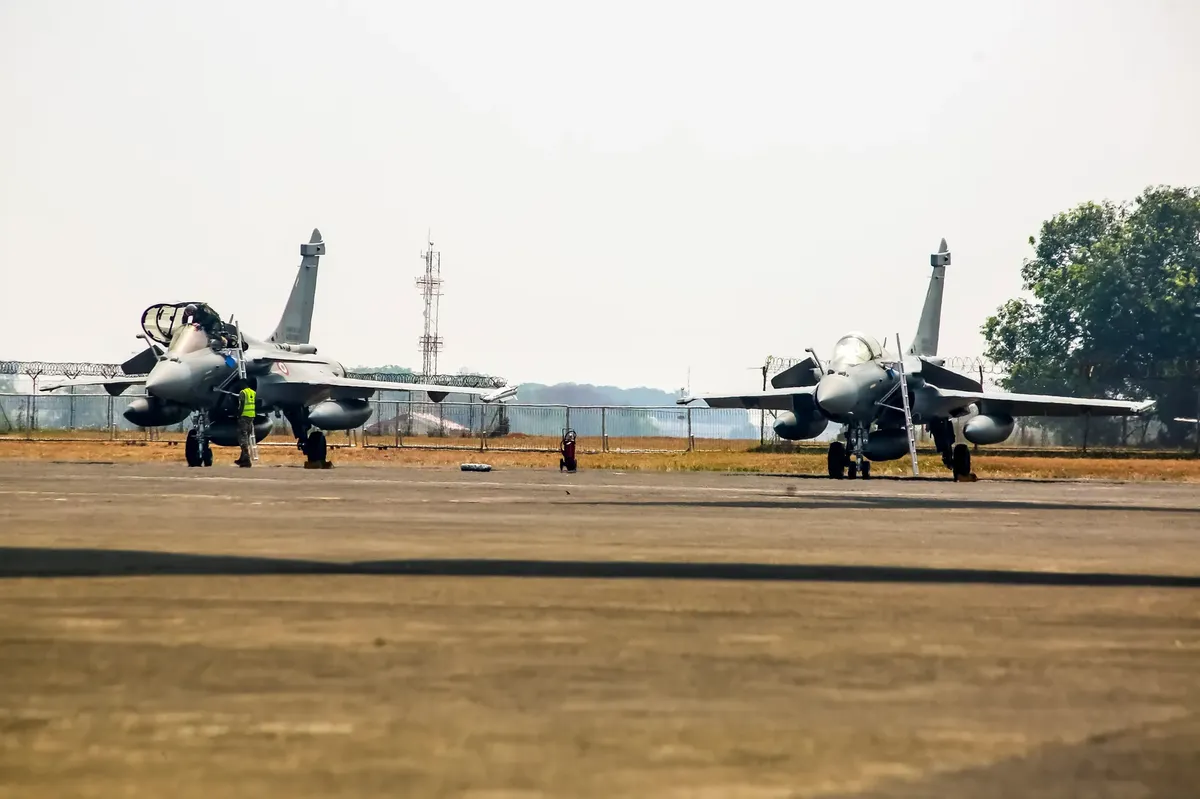
The original agreement sought to secure technical data and production sharing through a 20% funding commitment. Because the co-production was cancelled, the focus has shifted to how a regular customer maintains operational readiness.
The decision to end contributions while still addressing remaining payments highlights the friction between long-term development and immediate acquisition.
How does Indonesian aerospace industry growth look?
A factory floor hums with the sound of heavy machinery. The economic backdrop of the region provides context for these defense decisions, as Indonesian aerospace industry growth remains tied to broader economic trends.
This manufacturing sector is a vital component of the national economy. The shift in defense strategy suggests a prioritization of specific technological needs over broad-spectrum co-production.
What is the current state of South Korea defense aid?
A flight officer prepares for a mission in a sterile briefing room. While questions of South Korea defense aid and technology transfer remain, the primary focus has shifted to the successful execution of the KF-21 program in Korea.

The timeline of the KF-21 development shows rapid progress in South Korea. On May 20, 2025, the Defense Acquisition Program Administration (DAPA) marked the start of final assembly for the first mass-produced KF-21 Boramae fighter jet with a special ceremony.
On December 23, 2025, DAPA officially launched the KF-21 Additional Armament Test Project during a kick-off meeting at Korea Aerospace Industries (KAI) in Sacheon. On January 13, 2026, DAPA announced the successful completion of the flight testing phase for the KF-21 Boramae.
How do economic factors impact financing KF-21 with Indonesia?
A banker reviews a spreadsheet of regional growth figures. Evaluating the feasibility of financing KF-21 with Indonesia requires looking at the nation's macroeconomic stability.
According to World Bank data, Indonesia recorded GDP growth of 5.1% in 2025. These economic indicators influence how much a nation can commit to high-cost defense projects. The decision to move from a co-developer to a customer reflects a management of these economic realities.
| Agreement Type | Original Agreement (2010) | Current Status |
|---|---|---|
| Funding Model | 20% Project Cost | Regular Customer Purchase |
| Primary Goal | Technical Data & Production Sharing | Aircraft Acquisition |
I observed that the shift from co-production to a customer-only model changes the technical data landscape. The limitation of this shift is that the cancellation of co-production with PTDI ends all original contributions toward system development.
The subject here is Indonesia KF-21 cooperation.
The same subject is also called PT Dirgantara role.
This part also covers Challenges in defense tech transfer.
Related








Comments 0