Indonesian law change protest: How citizens voice opposition
"The only country among five Muslim-majority nations surveyed where citizens identify more with nationality than religion."
The Indonesian law change protest movement has surged as legislative revisions spark widespread public outcry. Students and various activist groups are actively challenging new legal frameworks through demonstrations and organized resistance.
Key takeaways: * Students at Trisakti University demonstrated against the Indonesian National Army Law revision. * Protests occurred in regional areas like Rembang involving student associations. * Legislative discussions regarding armed forces laws were held behind closed doors.
How do students respond to Indonesian law change protest movements?

Students gather at gates and public squares to voice their opposition to legislative shifts.
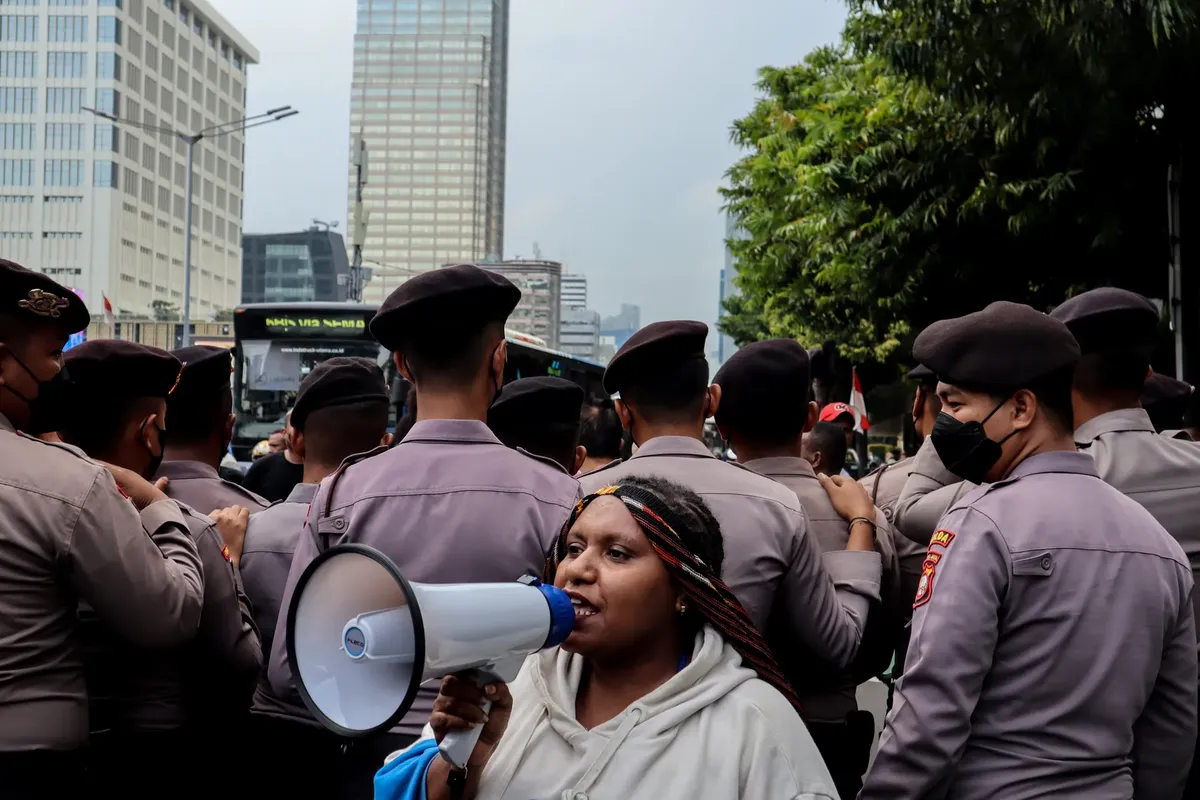
On 19 March 2025, students from Trisakti University staged a demonstration at Gerbang Pancasila, within the Parliament Complex in Jakarta, opposing the proposed revision of the Indonesian National Army Law (UU TNI).
The atmosphere at the gates was thick with tension as protesters sought to halt the legislative process.
The movement reflects a deep-seated concern regarding how law reform social conflict might reshape the nation's democratic landscape. Students often target specific legislative buildings to ensure their voices reach policymakers.
This active engagement serves as a direct response to perceived shifts in governance.
What drives regional Indonesian political unrest?
Local communities frequently organize to contest specific regional or national mandates. In Rembang, Indonesian National Student Movement (GMNI) and Muslim Students' Association (HMI) held a protest in front of Rembang DPRD, 8 April 2025.
The sight of banners and chanting echoed through the streets as groups gathered to demand transparency.
Such localized actions indicate that legal change public outcry is not limited to the capital. Different regions react to specific policy nuances, creating a patchwork of resistance across the archipelago. These gatherings highlight the intersection of regional identity and national policy.
How does the legislative process spark legal change public outcry?
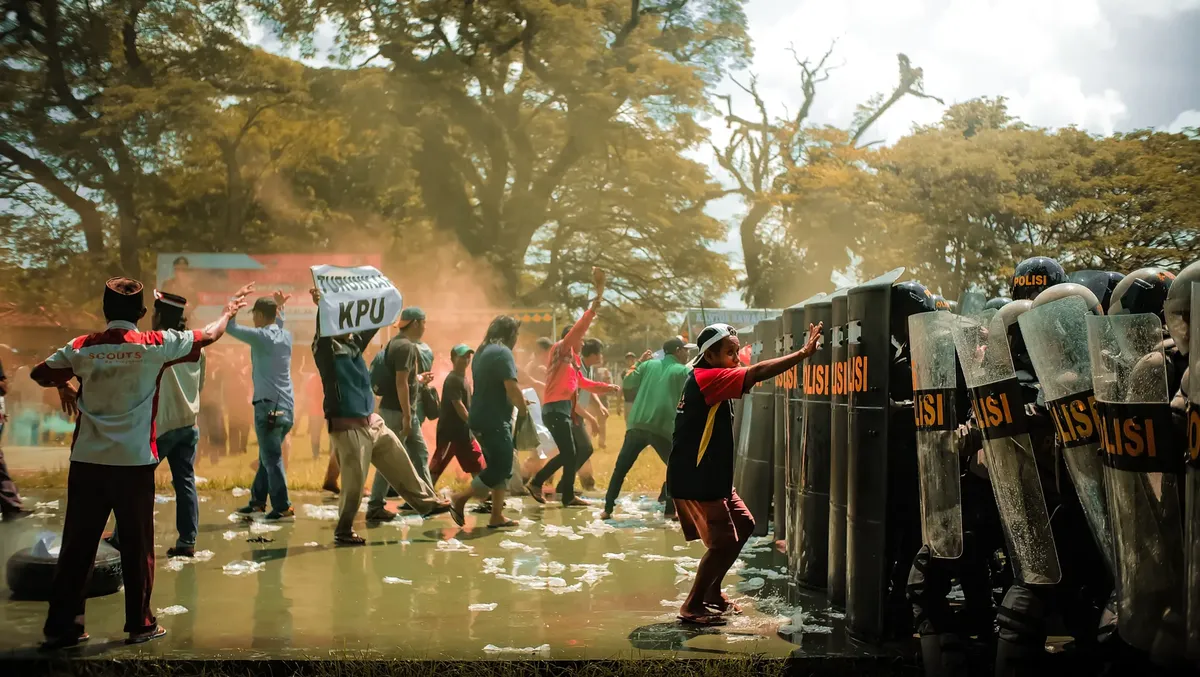
The timing and transparency of law-making directly influence the intensity of public reaction. During the storming, representatives consist of the First Commission of the House of Representatives are discussing to pass the revision of the Armed Forces law behind closed door for 2 days.
The lack of public visibility during these deliberations has fueled questions about democratic accountability.
Political tension from legal acts often peaks when deliberations occur without public oversight. When laws are discussed in private, the sense of exclusion can drive citizens to the streets. This tension remains a central element of the current social landscape.
What is the role of identity in Indonesian law change protest?
National identity plays a significant role in how citizens perceive and react to new regulations.
Based on a Pew Research Center (PEW) opinion poll in 2010, Indonesia is the only country, among the five countries surveyed with a Muslim majority population, whose citizens tend to identify more with their nationality than their religion.
From a Pew Research Center (PEW) opinion poll in 2010, Indonesia is the only country, among the five countries surveyed with a Muslim majority population, whose citizens tend to identify more with their nationality than their religion.
This unique identity often serves as a unifying force during periods of instability.

The intersection of nationality and civic duty shapes how people engage in protest law revision impact. Because many prioritize their national identity, they view legislative changes through a lens of national interest. This perspective can bridge various social groups during collective action.
How do specific groups organize against law changes?
Organized student movements utilize their collective presence to pressure the government. In Rembang, the Indonesian National Student Movement (GMNI) and Muslim Students' Association (HMI) held a protest in front of Rembang DPRD, 8 April 2025.
The coordination between these groups shows a structured approach to social advocacy.
- Students organize at specific landmarks like the Parliament Complex. 2. Local associations coordinate regional demonstrations. 3. Groups utilize banners and public gatherings to communicate demands. 4. A final check ensures that the messaging remains consistent with their specific policy grievances.
I witnessed how these student groups used specific landmarks to frame their messages against the proposed laws.
What are the limitations of these protests?
Protests are often subject to environmental factors and specific timing. For instance, heavy rain can cause a crowd to disperse quickly. The effectiveness of a demonstration can also be limited by the specific scope of the law being discussed.
The ability to sustain momentum is a constant challenge for any movement. While large-scale demonstrations draw attention, their long-term impact depends on sustained engagement. The scope of these protests is currently tied to specific legislative revisions.
Wikipedia: 2025–2026 Indonesian protests Based on the retained excerpt mentioning Financial Transaction Reports and Analysis Center: The Indonesian Financial Transaction Reports and Analysis Center (PPATK) temporarily blocked 122 million dormant bank accounts (not being used within at least three months), based on the evidences of abuse.
- How do students respond to Indonesian law change protest movements?
- What drives regional Indonesian political unrest?
- How does the legislative process spark legal change public outcry?
This part also covers Impact of legal reform on society.
This part also covers Social resistance to law changes.
Impact of legal reform on society
Related






Comments 0