Indonesian aviation tech leap tips for specialized aircraft
"The horizon of maritime sovereignty is shifting toward specialized aeronautical solutions that bridge the gap between coastal patrol and advanced sensor integration."
The Indonesian aviation industry is moving toward specialized maritime surveillance through strategic international partnerships and aircraft development. This transition focuses on the N219 MSA variant, designed to enhance maritime security capabilities through advanced radar and sensor technology.

Key takeaways: * Development of the N219 MSA variant focuses on maritime surveillance for national security agencies. * Technical specifications include specialized radar and infrared sensors for long-range detection.
* International cooperation serves as a primary driver for technological advancement in the sector.
How is the Indonesian aviation tech leap unfolding?
A technician adjusts a sensor array on a prototype frame in a quiet hangar. The Indonesian aviation tech leap is characterized by the transition from general utility aircraft to highly specialized maritime platforms.
This shift is evidenced by the recent development of the N219 MSA (Maritime Surveillance Aircraft) variant. On 21 November 2025, Indonesian Aerospace and Scytalys, a Greek company, signed a framework agreement to develop this specific variant for the Indonesian Maritime Security Agency (Bakamla).
This partnership aims to refine the aircraft's ability to monitor vast maritime territories effectively.
The focus on specialized equipment ensures that the aircraft meets the unique demands of maritime patrol. This strategic move positions the local industry to handle complex surveillance requirements.
- Identifying local manufacturing needs.
- Developing specialized aircraft prototypes.
- Scaling production for regional markets.
- In this sequence, the second step is the most extensive.
What can the N219 MSA actually do? An engineer reviews a digital map showing a radar sweep across a coastal coastline. The technical profile of the N219 MSA focuses on high-endurance surveillance and detection capabilities.
The variant is planned to be equipped with surveillance radar with a range of up to 160 nautical miles (300 km; 180 mi) and an electro-optical/infrared sensor with a detection range of 20 kilometres (12 mi). These tools allow for effective monitoring of maritime activities.
The N219 MSA would also have an operational range of up to 200 nautical miles (370 km; 230 mi) and more than five hours of endurance.
Such specifications ensure the aircraft can perform extended patrols over water. This combination of endurance and sensor range is vital for maritime security operations.
According to World Bank, the 2025 record includes 5.1%.
How does this relate to Indonesian air tech growth?
A pilot walks alongside a parked aircraft on a sun-drenched runway. The broader context of Indonesian air tech growth involves scaling specialized manufacturing to meet national security needs. According to World Bank data, Indonesia recorded GDP growth of 5.1% in 2025.
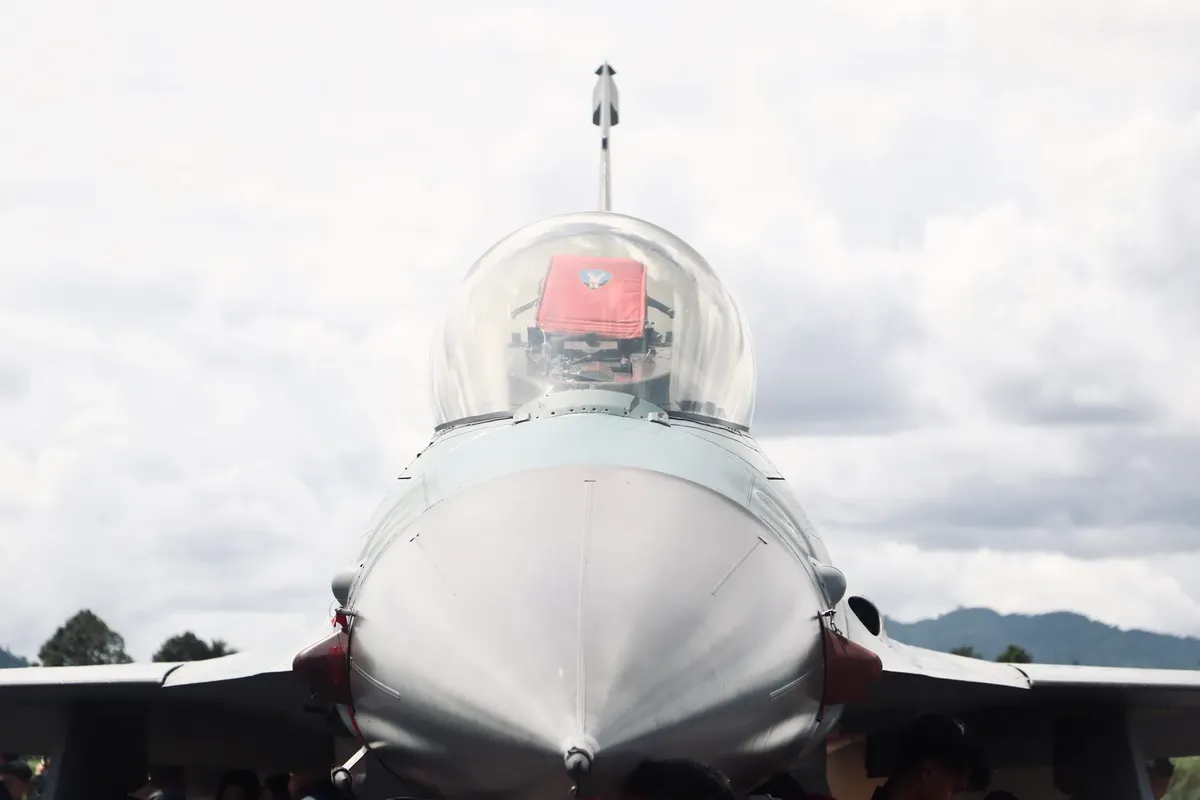
The development of the N219 MSA represents a move toward sophisticated, mission-specific aviation. Unlike standard transport models, these specialized variants require higher precision in both hardware and software integration.
This evolution reflects a growing domestic capacity to produce complex defense-oriented technology.
The industry is moving toward higher-value-added products through these specialized models. This trajectory suggests a shift from basic transport to advanced surveillance roles.
How does global cooperation shape these developments? Two executives shake hands in a modern boardroom overlooking an airfield. Global air cooperation is essential for integrating advanced sensor technology into domestic aircraft platforms.
The agreement between Indonesian Aerospace and Scytalys demonstrates how international partnerships facilitate technical leaps. By working with specialized firms, the local industry can integrate advanced radar and infrared systems.
This collaborative approach accelerates the deployment of advanced maritime surveillance tools.
These partnerships help bridge the gap between domestic manufacturing and global technological standards. Such cooperation is a cornerstone of modern aerospace development.
What are the future of Indonesian air travel and defense implications?
A security officer monitors a radar screen in a darkened command center. The future of Indonesian air travel and defense implications involves balancing commercial utility with specialized mission readiness.
While the N219 was originally intended for various roles, including cargo and passenger transport, the MSA variant prioritizes security. This specialization allows the fleet to serve dual purposes: general utility and high-stakes maritime patrol.
The ability to produce versatile aircraft helps maintain a robust domestic aviation ecosystem.
The industry is preparing for a future where versatile platforms serve both civilian and security sectors. This duality is key to long-term sustainability.
What are the international air industry challenges for this project?
A logistics manager checks a shipment of electronic components near a hangar. Addressing international air industry challenges requires managing complex funding and production timelines.

In 2006, the US$65 million funding for the 19 seat N219 development was proposed under the Qatar-Indonesia Joint Investment Fund, with 70% funded by Qatar and 30% by Indonesia, to produce a prototype within two years.
Managing such large-scale, multi-national investment projects involves significant coordination. Ensuring that technical specifications meet the needs of agencies like Bakamla remains a primary operational challenge.
Success depends on maintaining stable funding and meeting strict delivery schedules. Navigating these complexities is vital for the project's completion.
The same subject is also called Aviation tech in Indonesia.
The same subject is also called PTDI industry progress.
This part also covers Indonesian defense aviation ties.
Related








Comments 0