Coal Exports: Indonesia Balances 25% Domestic Supply Needs
"The transition from a resource-rich exporter to a future-ready economy is not a choice, but a necessity dictated by a changing planet."
Indonesia is currently navigating a massive shift in energy policy, caught between the pressures of global coal demand and the need to protect domestic industry.
As the world moves toward decarbonization, the Indonesian government is balancing massive export revenues with the necessity of securing local energy stability.
* Shifting Global Demand: Global decarbonization efforts are rapidly changing the landscape of coal trade. * Domestic Security First: Policies requiring local supply are becoming critical variables for industrial stability. * Balancing Production and Regulation: The nation faces the challenge of managing record production while meeting tightening environmental standards.

Why are coal export controls and energy policy changing now?
A government official sits in a Jakarta office, moving quickly through stacks of reports. Outside the window, the massive scale of a shipping port stretches toward the horizon, where endless cargo moves between sea and land.
According to the IEA, global coal trade is expected to decline by about 12% through to 2026.
The global energy market is in flux. As the world shifts toward new energy sources, the regulatory pressure on coal is mounting alongside its changing value. As a major global exporter, Indonesia is uniquely sensitive to these shifts.
International environmental regulations are also tightening the rules of maritime transport.
If various requirements are strictly enforced, the International Maritime Organization's marine fuel requirements will lead to a 90% reduction in sulfur oxide emissions; meanwhile, the European Union is planning even stricter emission controls.
These international shifts directly impact the efficiency and cost of moving bulk cargo.
To ensure domestic energy security, the government has implemented a Domestic Market Obligation (DMO), which requires mining companies to allocate 25% of their production for local use at a fixed price of $70 per ton.
This policy serves as a strategic compromise between companies seeking to maximize export profits and a government aiming to stabilize the domestic power supply.
These policy shifts represent more than just new rules; they signal a fundamental restructuring of the industrial landscape. Watching how Indonesia manages this transition will be key to understanding the future of the global energy market.
But how much weight does this massive production actually carry in the global equation?
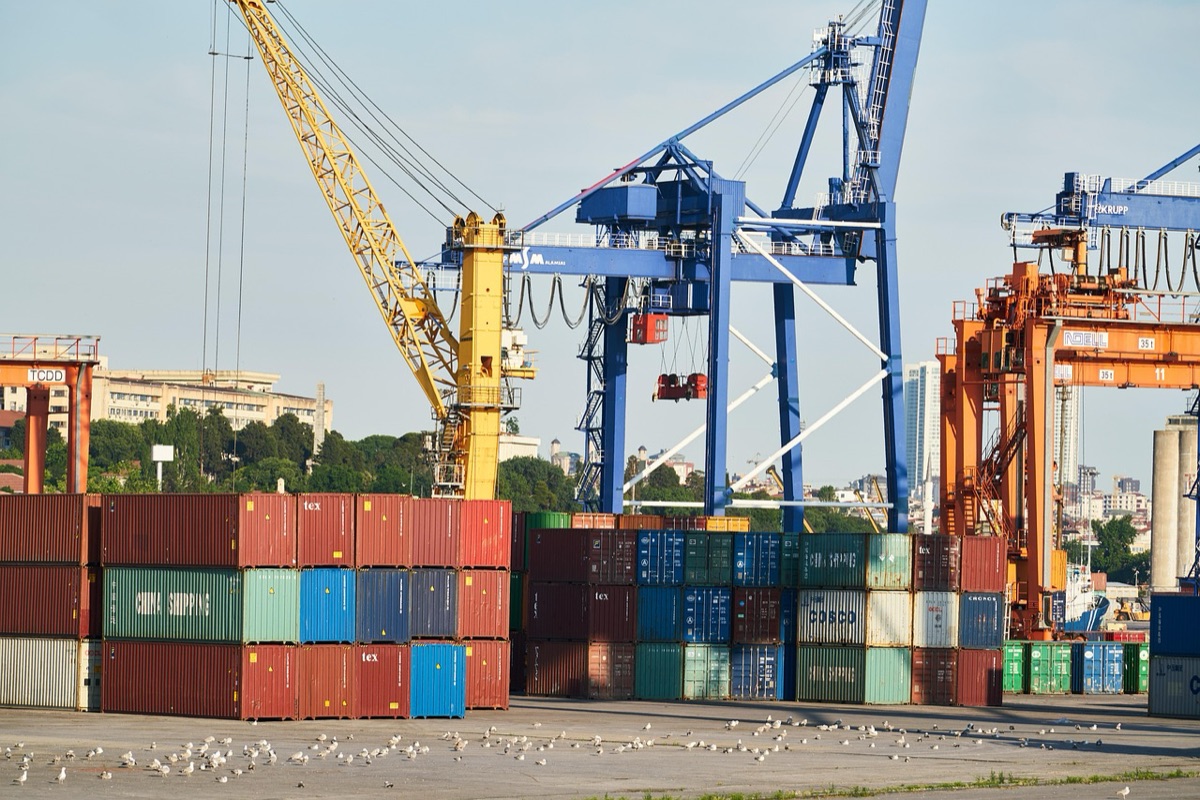
What does massive production and export volume mean? A massive crane at the port swings rhythmically, lifting heavy piles of black coal. Once a cargo ship is fully loaded, the low rumble of engines signals its departure toward the open sea.
Indonesia's coal industry has long held a massive share of the global market. As of 2019, Indonesia exported 506 million short tons of coal, accounting for 32% of the world's coal exports. This figure highlights the significant influence the nation holds over the global energy supply chain.
Production levels have also shown consistent growth. In 2019, coal production surged to a record 679 million short tons, marking a 12% increase from the previous year. This growth was driven by robust demand across Asia.
In fact, between 2010 and 2020, exploration and production grew by approximately 105%.
However, this massive scale brings significant management complexities. Rapid growth in energy production has historically led to explosive shifts; for instance, between 2004 and 2008, energy production in Indonesia increased by 34% while exports grew by 76%.
| Category | Key Details and Impact |
|---|---|
| Domestic Market Obligation (DMO) | 25% of production must be supplied locally at a fixed price ($70/ton) |
| Global Market Share much as 2019 | Accounted for 32% of global coal exports in 2019 |
| Environmental Variables | Tightening emission controls from the IMO and the European Union |
| Industrial Growth Trend | Approximately 105% growth in exploration and production (2010-2020) |
When an industry of this magnitude faces policy shifts, the economic ripples are felt both domestically and internationally. But as the tide turns, the challenges are moving from the docks to the boardroom.
What challenges does a changing market pose? Late at night, analysts in a dimly lit office stare at glowing monitors. The lines on the charts fluctuate wildly as they attempt to predict future demand through moving numbers.
The changing global market is accelerating the deadline for Indonesian policy shifts. As the energy transition gathers speed, uncertainty regarding the future demand for coal grows.
The IEA expects global coal trade to decline by about 12% through 2026, driven by growing domestic production in coal-intensive economies such as China and India and coal phase-out plans elsewhere, such as in Europe.
This projected decline poses a significant challenge to an export-driven economy like Indonesia. Furthermore, Indonesia is looking to move beyond being a mere exporter of raw materials toward higher-value industries.
According to World Bank data, Indonesia recorded a high-technology share of manufactured exports of 8.7% in 2024.
Reducing reliance on raw materials like coal and fostering tech-intensive industries will be a vital long-term survival strategy. The current focus on controlling exports and prioritizing domestic supply can be viewed as a transitional measure to prepare for this future.
The goal is to use resource wealth to fuel industrial transition while managing the environmental and market shifts that follow.
The struggles faced in this transition are not just economic issues; they are directly tied to the design of the nation's future. But how will these policy changes actually hit the ground level?

How will policy changes impact the industry?
Looking out over an industrial complex where smoke rises into the sky, stakeholders discuss the direction of new policies. Some companies sense a crisis, while others calculate new opportunities.
According to the International Maritime Organization, the enforcement of marine fuel requirements will result in a 90% reduction in sulphur oxide emissions. Stringent government controls have a dual impact on the industry.
On one hand, they can stabilize domestic energy prices and ensure a reliable power supply, which is essential for maintaining a domestic manufacturing base.
On the other hand, for companies heavily reliant on exports, these policies can lead to direct hits to profitability. In a climate where global demand is shrinking, the obligation to supply the domestic market can strain corporate finances.
However, this also serves as a clear signal that industries must diversify during the energy transition.
The core of these policies is "strategic resource management." There is a clear intention to use coal not just as an export commodity, but as a financial engine to fund the transition of domestic industries.
| Impact Factor | Positive Impact | Negative Impact |
|---|---|---|
| Domestic Energy Security | Ensures stable power and energy supply | - |
| Corporate Profitability | - | Profit limitations due to fixed-price supply |
| Industrial Restructuring | Potential to fund future industries | Economic blow to the traditional mining sector |
| International Relations | Provides a foundation for environmental compliance | Potential weakening of export competitiveness |
These shifts will likely act as the driving force in reshaping the entire industrial ecosystem, moving far beyond short-term economic indicators. To navigate this, a clear roadmap is required.
Steps for responding to policy changes
The dawn breaks over the port, and while the landscape looks much like it did yesterday, the underlying policy currents are shifting subtly.
I remember visiting a local mining site last year; the sheer scale of the earth moving was breathtaking, but the quiet tension among the workers regarding new regulations was palpable.
According to World Bank data, Indonesia's high-technology share of manufactured exports was 8.7% in 2024. To manage this massive transition, the government and industry players must follow a strategic progression:
- Strengthen Domestic Energy Security: Use the Domestic Market Obligation (DMO) to build a stable domestic power grid.
- Build Environmental Compliance Systems: Align export and logistics systems with global standards, such as those from the International Maritime Organization (IMO).
- Diversify the Industrial Structure: Reinvest revenues from coal exports into high-value manufacturing and future energy industries.
- Establish Sustainable Growth Models: Gradually increase the share of high-tech products to reduce reliance on raw materials.
As the decline in global demand becomes more visible, the key will be what additional regulations or incentives the government introduces to protect domestic industry. This will heavily influence both local investment plans and how global energy companies approach the Indonesian market.
Additionally, how the government manages the social costs of the energy transition and potential industry backlash will be a critical factor in maintaining policy momentum. The journey to maintain status as a resource-rich nation while building a sustainable future has entered a decisive phase.
FAQ
What is the Domestic Market Obligation (DMO) policy? It is a policy requiring mining companies to supply a specific percentage of their production (e.g., 25%) to the domestic market at a fixed price (e.g., $70 per ton) to ensure local energy security.
How will declining global coal demand affect the Indonesian economy? It could directly impact the economic stability provided by export revenues, necessitating a shift toward higher-value manufacturing and technological industries.







Comments 0