How did inflation affect the daily life of citizens?
"The stability of a nation's currency is often caught in the crosshairs of political shifts and economic volatility."
The 1965 rupiah redenomination was driven by massive inflation that had reached 600% by that year. This monetary adjustment aimed to manage the fallout from a period of extreme price instability and political shifts.
This article examines the economic context of the 1965 rupiah redenomination, the consequences of hyperinflation, and the specific steps taken to address the crisis.
Why did the 1965 rupiah redenomination occur?

A hand reaches for a stack of increasingly worthless banknotes in a crowded market. The 1965 rupiah redenomination was a response to the crushing weight of inflation, which had climbed to 600% by 1965.
This economic instability necessitated a change in how the currency was handled to manage the massive denominations in circulation.
The economic context of the 1965 rupiah redenomination was defined by a complete breakdown of purchasing power. For instance, the largest denomination banknote had increased 100-fold from 100 rupiah in September 1959 to 10,000 rupiah in August 1964.
Such rapid shifts made daily transactions difficult and signaled a desperate need for monetary reform.
The price index at the end of 1965 was calculated at 363 times higher than it had been in 1958. This meant that the value of the currency was evaporating at an unprecedented rate.
The 1965 rupiah redenomination was an attempt to reconcile these numbers with the reality of a domestic economy in turmoil.
How did inflation affect the daily life of citizens?
A shopper stares at a price tag that seems to change even as they reach for their wallet. The 1965 rupiah redenomination was not just a technical change but a reaction to how inflation had fundamentally altered the relationship between people and their money.
Prices had risen approximately seven times over the 12 months preceding the end of 1965. This constant upward pressure meant that savings were being depleted almost instantly. The 1965 rupiah redenomination was a way to address the logistical nightmare of handling such large numbers.
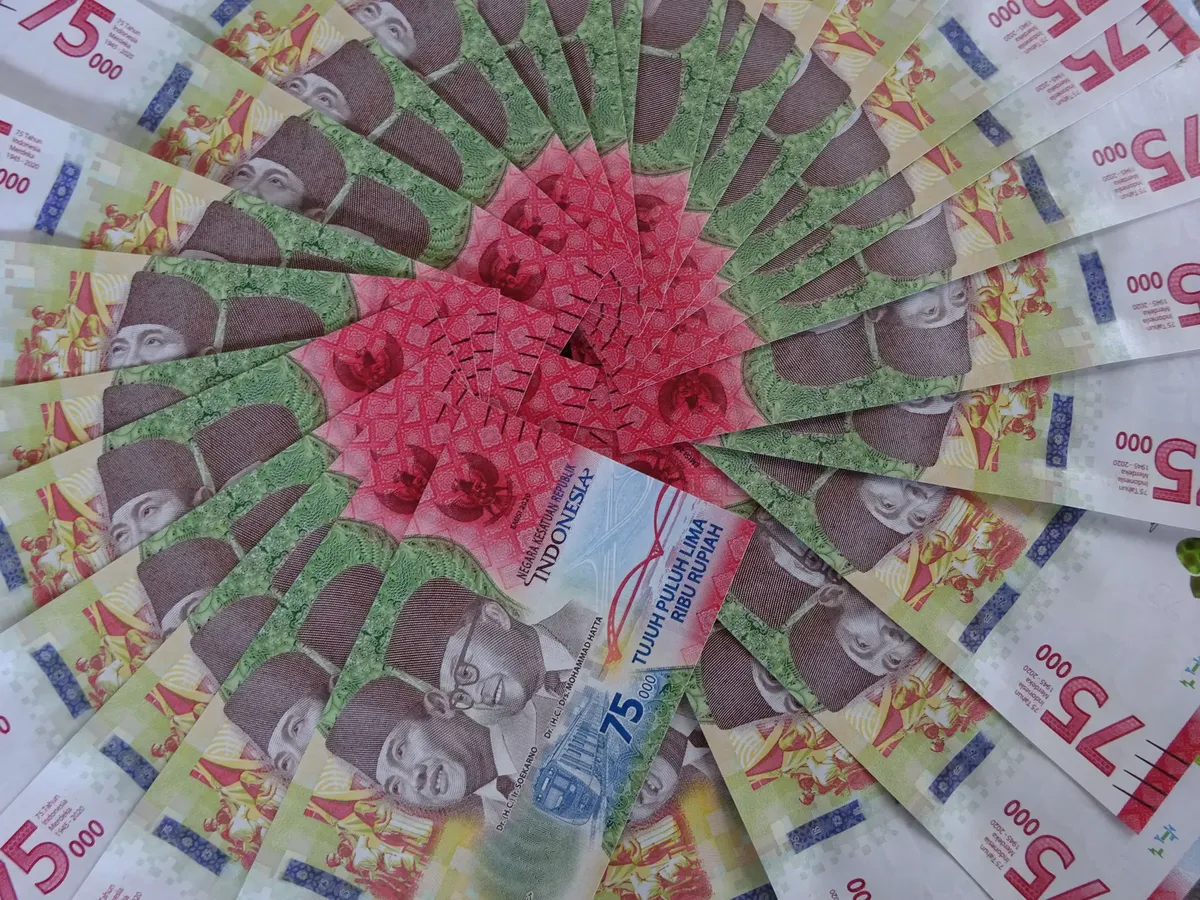
The 1965 rupiah redenomination also stands as a response to the volatility seen in previous years. In 1961, inflation was 27%, but it jumped to 174% in 1962. These figures show the momentum of the crisis that led to the 1965 era.
What were the specific steps of the currency change?
Late at night in the quiet office, an official wipes sweat from his brow while sorting the new notes to combat the legacy of inflation.
An official sits at a desk, carefully preparing new notes to replace the old ones. The 1965 rupiah redenomination involved specific adjustments to the denominations used in the economy.
- Assess the existing denominations to prepare for the new scale of currency. 2. Implement the change to the banknote values to reflect the new economic reality. 3. Distribute the new currency to stabilize the medium of exchange.
I remember looking at the massive numbers on the old notes and wondering how they would ever be practical again. The 1965 rupiah redenomination was a necessary step to manage the 100-fold increase in banknote values seen between 1959 and 1964.
The process was complicated by the fact that the largest denomination had grown from 100 rupiah in 1959 to 10,000 rupiah by August 1964. This rapid growth made the 1965 rupiah redenomination a vital tool for managing the scale of money.
What were the limitations of the currency adjustment?
The heavy weight of a leather wallet filled with paper notes becomes a burden. A limitation of the 1965 rupiah redenomination was that it could not single-handedly resolve the underlying causes of hyperinflation.
The 1965 rupiah redenomination attempted to fix the symptoms of a 600% inflation rate. While it addressed the scale of the currency, the underlying price volatility remained a significant challenge for the nation's stability.
How does this compare to other currency shifts?

A comparison of historical currency values shows the scale of the shifts. The following table compares the 1959 and 1964 banknote values to illustrate the scale of the issue.
| Year | Largest Denomination (Rupiah) |
|---|---|
| 1959 | 100 |
| 1964 | 10,000 |
The 100-fold increase between 1959 and 1964 highlights the necessity of the 1965 rupiah redenomination. This comparison shows why the scale of the currency had to be addressed.
- Why did the 1965 rupiah redenomination occur?
- How did inflation affect the daily life of citizens?
- What were the specific steps of the currency change?
The same subject is also called Indonesian political turmoil 1965.
Political chaos and money reform
Related
- What were the implications of the KPK law change context?
- How did inflation affect the daily lives of citizens?
What were the implications for national stability?
The stability of a nation's currency directly impacts the broader stability of the nation. The extreme price instability demonstrated by the 600% inflation rate created an environment where economic planning became nearly impossible for citizens and businesses alike.
According to the Representative Council, the People's Representative Council passed legislation in July 2026 to establish international financial centres to attract global banks, wealth managers, family offices, and aircraft and ship leasing companies.
According to the IMF, the IMF revised its 2009 Indonesia forecast to 3–4% from 2.5% after the $512 billion economy expanded 4.4% in the first quarter from a year earlier and last month.
The monetary adjustment served as an attempt to restore a baseline level of confidence in the national medium of exchange.
The breakdown of purchasing power, evident when the largest denomination banknote increased 100-fold, threatened the fundamental structure of the nation’s commerce.
Such a severe erosion of value undermines public trust, which is crucial for maintaining economic stability during periods of political shifts.
The redenomination process itself was a visible acknowledgment of the crisis affecting the nation. It represented a governmental effort to manage the fallout from a period where the currency's value was rapidly evaporating.
This action signaled a necessary, albeit drastic, intervention to preserve some semblance of economic order.
How did the redenomination procedure compare to previous economic pressures?
The 1965 rupiah redenomination addressed a level of monetary deterioration far exceeding previous fluctuations. While inflation was noted in 1961 at 27%, the subsequent jump to 174% in 1962 showed a dangerous acceleration toward the crisis point.
The 600% inflation rate by 1965 represented a peak severity not seen in the preceding years.
The comparison between the 1959 and 1964 banknote values illustrates the magnitude of this escalation. The transition from 100 rupiah to 10,000 rupiah in the largest denomination showcases a growth rate that necessitated a fundamental overhaul of the currency system for the nation.
This massive shift in denomination scale was the primary driver for the specific steps taken during the redenomination.
The necessity of the currency change stemmed from the practical difficulty of conducting daily transactions with such large, unwieldy denominations.
The logistical nightmare associated with handling currency whose value was diminishing so rapidly demanded a decisive monetary reform to support national operations. The redenomination was thus a direct response to the practical constraints imposed by hyperinflation.








Comments 0